
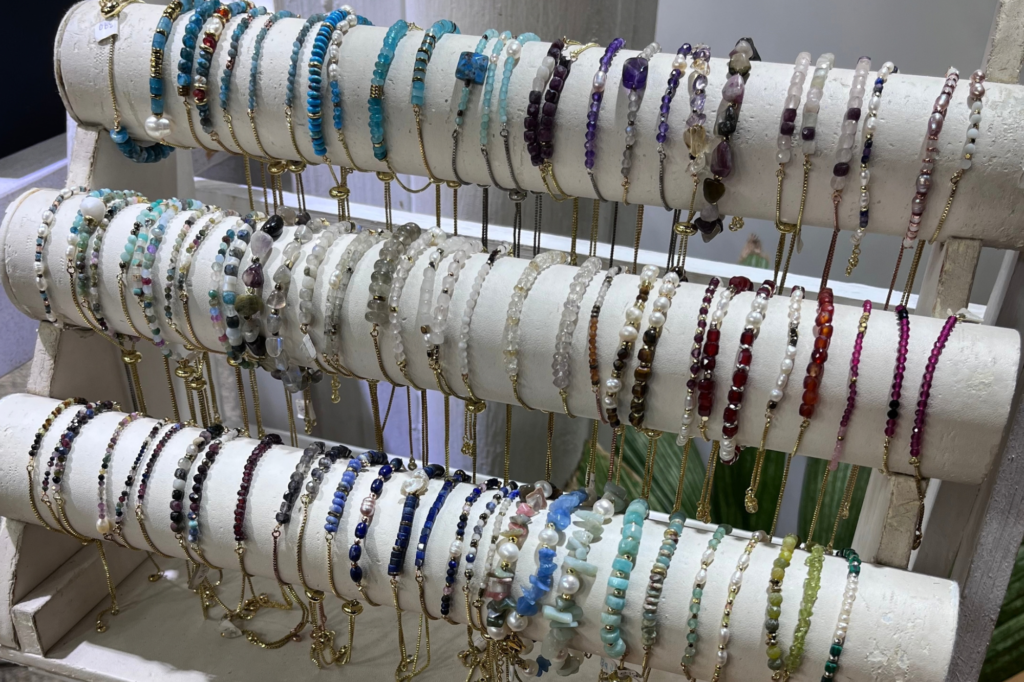
Handmade appears on labels far more often than it applies in practice. In a city with as much jewellery production as Bangkok, telling the genuine article from the label is a skill worth having, whether buying one piece or a hundred.
A working definition
Handmade should mean a piece shaped, assembled or finished substantially by hand, in small batches, rather than stamped out on an automated line. Some machine assistance, in cutting or polishing, does not disqualify a piece, but the meaningful steps should involve a person’s hands.
Signs a piece is genuinely handmade
Small variations between pieces in a set, visible tool marks or hand-finishing on the reverse, and a supplier who can describe the making process specifically are all reasonable signals. Identical, machine-uniform pieces at scale rarely are.
Why it matters beyond the label
Handmade production tends to come from smaller workshops, which usually means lower waste, closer oversight of materials, and a supply chain a brand can actually describe. The word is doing real work when it is accurate.
Asking the right question
Rather than asking “is this handmade,” ask who made it and where. A specific answer is far more useful than a label, and a supplier confident in their process will usually offer more detail than asked for.
How we define it
Every piece we carry is made by named workshops we have visited, not stamped out at scale. Sourcing Handmade Jewellery in Southeast Asia goes further into the workshops behind the claim, and our shop has the current handmade pieces to see what that looks like in person.