
Shell jewellery has a reputation problem. For years it was associated with beach holidays and souvenir shops — the kind of thing you buy on impulse and never wear again once you’re home. That reputation was earned, mostly, by low-quality pieces that didn’t survive the journey back.
What’s happening now is different. Shell has re-entered fashion jewellery through a quieter door: natural materials, considered craft, and a growing preference for organic texture over synthetic shine. The pieces arriving through that door are worth paying attention to.
What makes shell interesting as a material
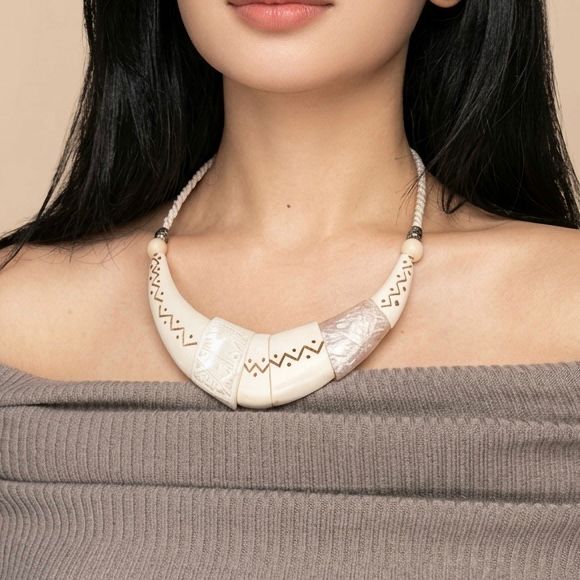
Shell has a quality that very few materials replicate: iridescence that shifts with light and angle. Mother of pearl, abalone, and paua shell all carry this, each in different colour ranges. Mother of pearl moves between white, cream, and pale silver. Abalone shifts through blue, green, and gold. Paua — the New Zealand abalone — runs deep teal and purple.
This isn’t a finish applied to the surface. It’s the material itself. Each piece is therefore unique in the way a natural stone is unique — the pattern and shift of colour is inherent to that particular shell, not manufactured.
How it’s being worn now
The current use of shell in fashion jewellery tends toward restraint rather than abundance. Single shell pendants on fine chains. Small inlaid pieces where shell is one element among several. Earrings that use shell as a focal point without competing elements. The approach is considered rather than decorative.
This is a significant shift from the layered, maximalist shell pieces of previous decades. The material itself hasn’t changed; the styling has.
What to look for
The quality of shell pieces varies considerably. Look for clean cutting and polishing — rough or uneven edges suggest rushed finishing. Check that inlaid shell is set securely and flush with its setting rather than proud of it or rattling. The iridescence should be consistent across the surface; patches of dullness suggest poor-quality material or damage.
As with all natural materials, some variation between pieces is normal and expected.
How to wear it
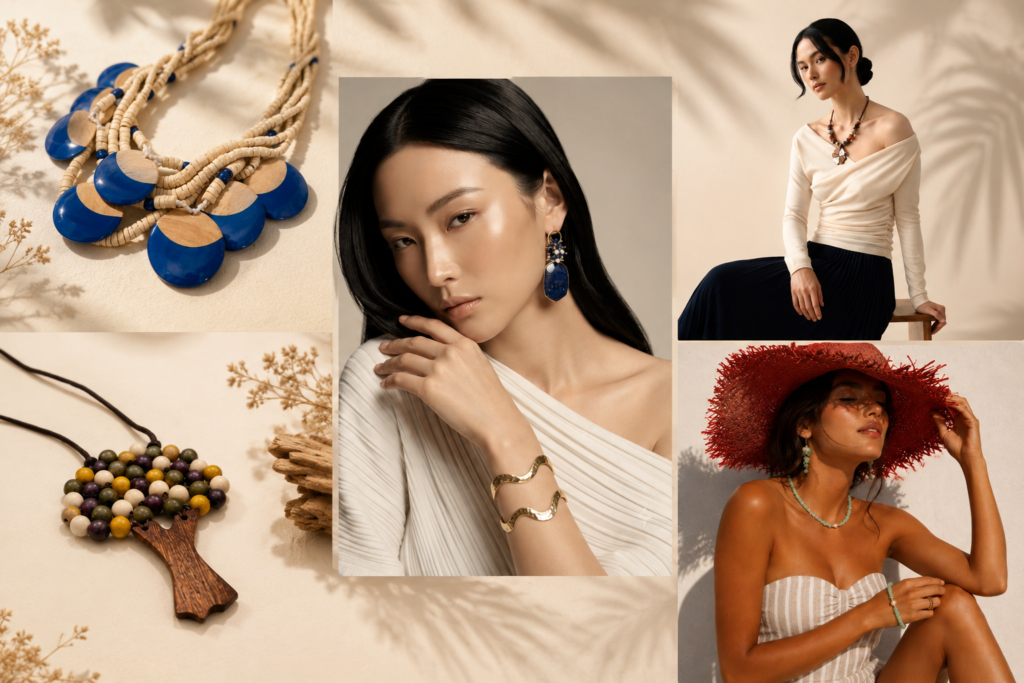
Shell suits warm-weather dressing naturally — the material has an inherent lightness that works with linen, cotton, and relaxed silhouettes. It also pairs well with other natural materials: wooden beads, woven cord, natural stone. Against clean white or warm neutral outfits, the iridescence of the shell becomes the focal point without effort.
For cooler months or more formal dressing, a single shell piece — a pendant or a simple earring — can add organic warmth without reading as casual.
Shell is one of the oldest jewellery materials in the world. The fact that it’s finding a new audience now, through craft and natural material interest rather than novelty, suggests it’s arrived somewhere more permanent than the souvenir shop.
Shell is one of several materials worth thinking through this way. Wood, Brass or Stainless Steel: Which Jewellery Material Is Right for You compares the other options we work with, and our shop has the current shell pieces if you want to see what that looks like in practice.