
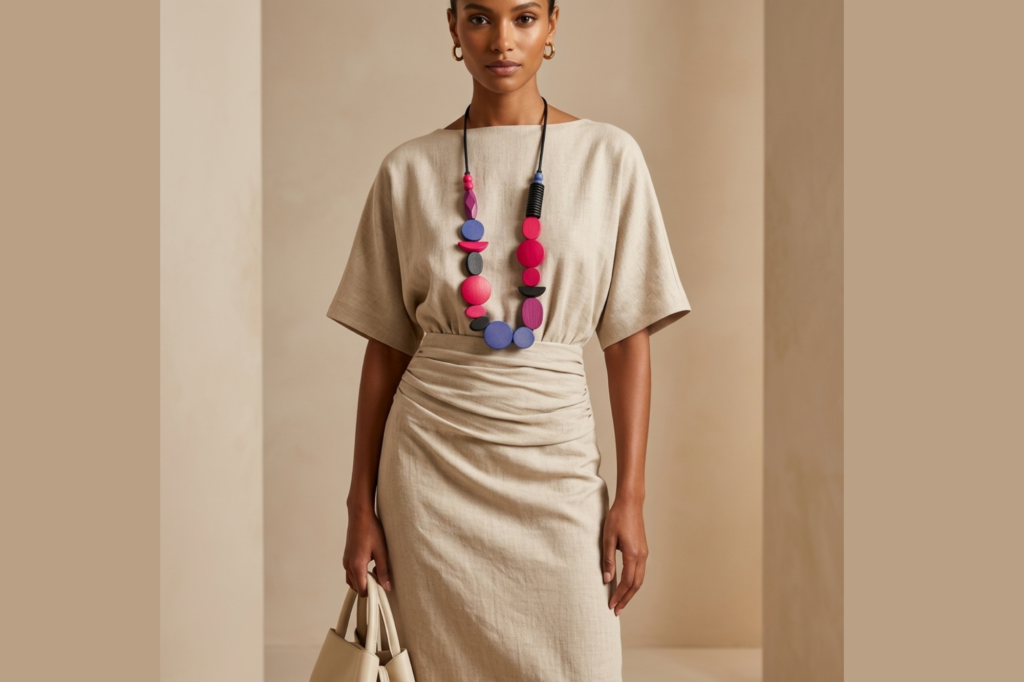
A statement necklace is a piece with presence — scale, colour, texture, or all three. It’s designed to be noticed, and that’s exactly what makes it easy to get wrong. A piece with that much presence needs space to work in. Give it that space and it does something remarkable. Crowd it with competing elements and it tips from statement into noise.
The outfit is the starting point
Statement necklaces work best against simple outfits. A plain white shirt, a solid-colour dress, a clean crew neck jumper — these provide the backdrop that lets the necklace be the thing you see. The more complex the outfit (pattern, texture, embellishment), the harder the necklace has to work to be visible at all, and the more likely it is that the two fight each other.
This is the single most useful thing to know about statement necklaces. The outfit should be simple. The necklace earns the simplicity.

Edit everything else
When you’re wearing a statement necklace, scale back the rest of your jewellery significantly. Small or no earrings — the necklace will sit near your face and compete directly with anything substantial at the ear. Minimal or no bracelets. No other necklace. The statement piece is doing the work; everything else should step aside.
The exception is rings, which sit far enough from the necklace to coexist without competition. A stack of rings with a statement necklace and simple outfit is a considered combination.
Neckline
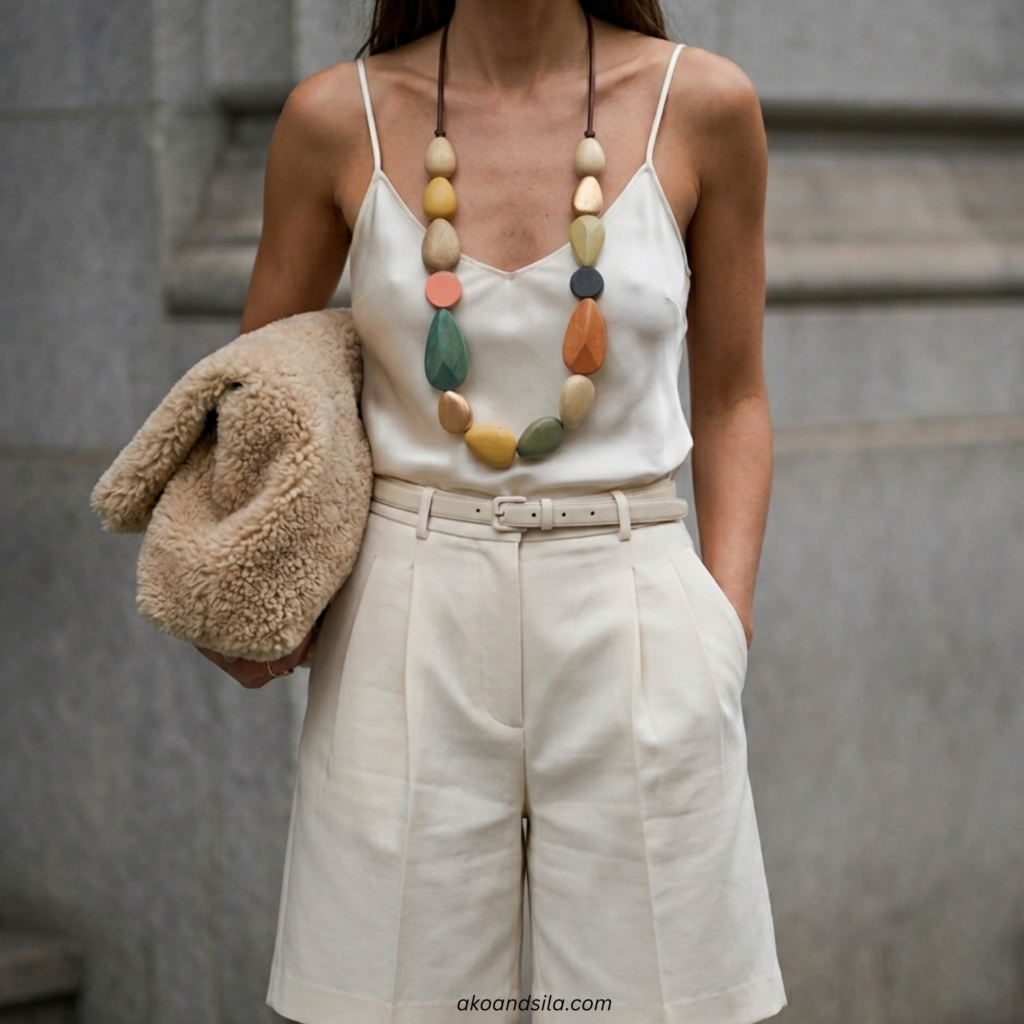
A statement necklace needs the right neckline to sit correctly. A V-neck, scoop neck, or strapless creates space for the piece to be seen. A crew neck or high neck competes with the necklace for the same territory — the piece sits on or near the fabric rather than against skin, and neither looks its best.
Scale and proportion
Scale should be appropriate to your frame. A very large, heavy piece on a small frame can overwhelm rather than balance. A bold piece on a larger frame has more room to read. This is a rough guide rather than a rule, and confidence in wearing a piece changes how it reads considerably.
When to leave it at home
There are contexts where a statement necklace doesn’t serve you: anywhere the conversation is more important than how you look, any situation where you’ll be moving a lot and the piece becomes physically inconvenient, and anywhere the formality level is high enough that a very large piece reads as wrong rather than bold.
Most other contexts are fair territory. A statement necklace worn with a simple outfit and decisive confidence works in more places than the name suggests.
Knowing when to leave a bold piece at home is really a question of occasion. Jewellery and Occasion: How to Dress a Piece Up or Down goes further into reading a room correctly, and our necklaces edit has statement pieces worth building an outfit around.