
A jewellery display that isn’t selling is almost always a display problem rather than a product problem. The pieces may be perfectly good — the issue is how they’re presented, what’s missing from the range, and whether the display gives customers a clear reason to stop and engage.
This guide is aimed at boutique owners and market traders stocking fashion jewellery for the first time or looking to improve an underperforming fixture.
Range before quantity
The most common mistake when setting up a jewellery display is buying too many of the same thing rather than building genuine range. Twenty pairs of earrings in similar styles don’t give customers twenty reasons to buy — they give customers one reason to pick one pair and move on. Twenty pairs of earrings across different materials, sizes, price points, and styles give customers multiple entry points into the display.
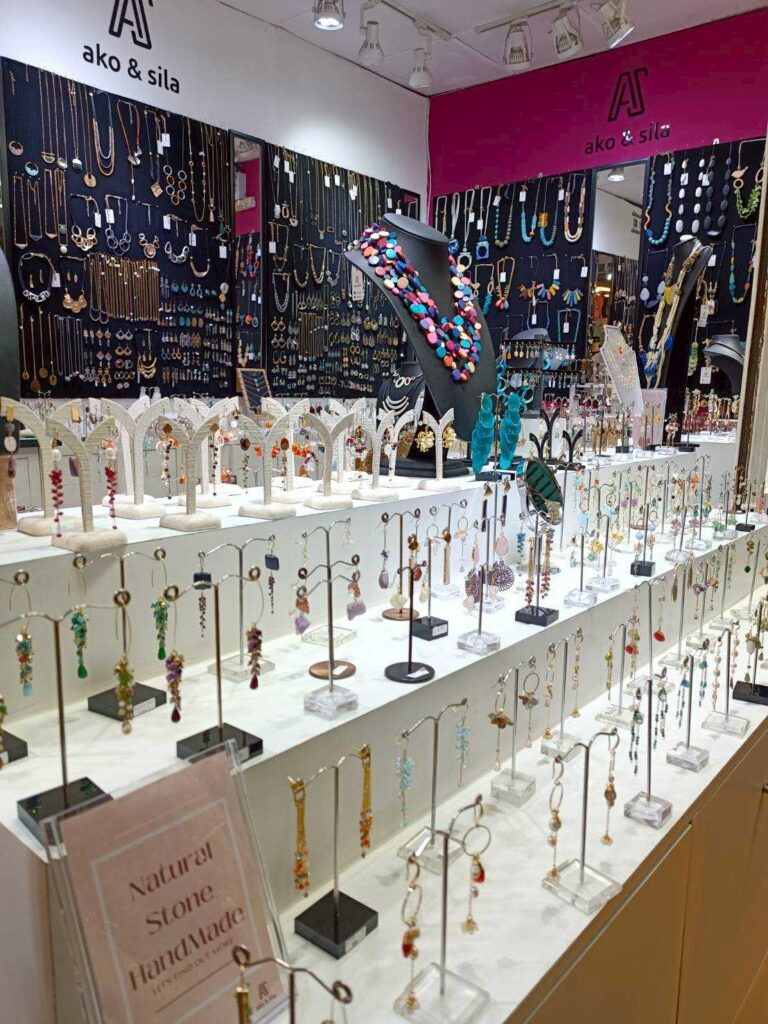
A well-functioning jewellery display covers at minimum: earrings in at least three different sizes or styles, a necklace option, something for the wrist, and a ring or two. Customers who come in for earrings often leave with a bracelet too — but only if there’s a bracelet worth buying on display.
Think in colour stories
Random colour placement on a display looks busy and makes individual pieces harder to see. Grouping by colour — even loosely — creates a visual logic that customers find easier to navigate and that makes the display look more considered.
A simple approach is to organise your display in warm tones on one side and cool or neutral tones on the other, with natural materials like wood and shell as a bridge between the two. This isn’t rigid — it’s a starting point that makes a display look intentional rather than random.
Price point spread
A display that only covers one price point limits its own sales. Customers shopping for a gift want a range — something small and inexpensive as a token option, something mid-range as the main gift, and something more special as a treat. If your display only covers one of those three, you’re leaving sales on the table.
Fashion jewellery works particularly well for this because the range of achievable price points is genuinely wide. A small pair of stud earrings at a low price point alongside a more elaborate statement piece at two or three times the price gives the display range without requiring expensive stock.
Refresh regularly
A jewellery display that looks the same every time a regular customer visits stops generating interest. Rotating stock — moving pieces that have been on display for more than a few weeks to a different position, bringing in new styles, removing pieces that aren’t selling — keeps the display feeling current and gives regular customers a reason to check back.
Even small changes make a difference. Moving a piece from a lower position to eye level, changing the display prop behind it, or grouping it with different neighbouring pieces can restart sales on something that had stalled.
Display props and presentation
Jewellery sells better when it’s displayed on something rather than laid flat. Earring cards, bust forms for necklaces, and ring cones all show pieces at their best and make them easier for customers to visualise wearing.
Keep displays clean and uncluttered. A display that’s too full is harder to shop than one with breathing room between pieces. If you’re running out of space, edit the display rather than squeezing more in.
At ako & sila we supply wholesale to boutiques and market traders from a minimum of 30 pieces, with no restriction on mixing across categories. Our team is happy to advise on range building for new wholesale customers — get in touch via the wholesale page at akoandsila.com.
A strong physical display is worth photographing well too. How to Photograph Jewellery for an Online Store covers how to carry that same range online, and our wholesale page has the details on ordering.