
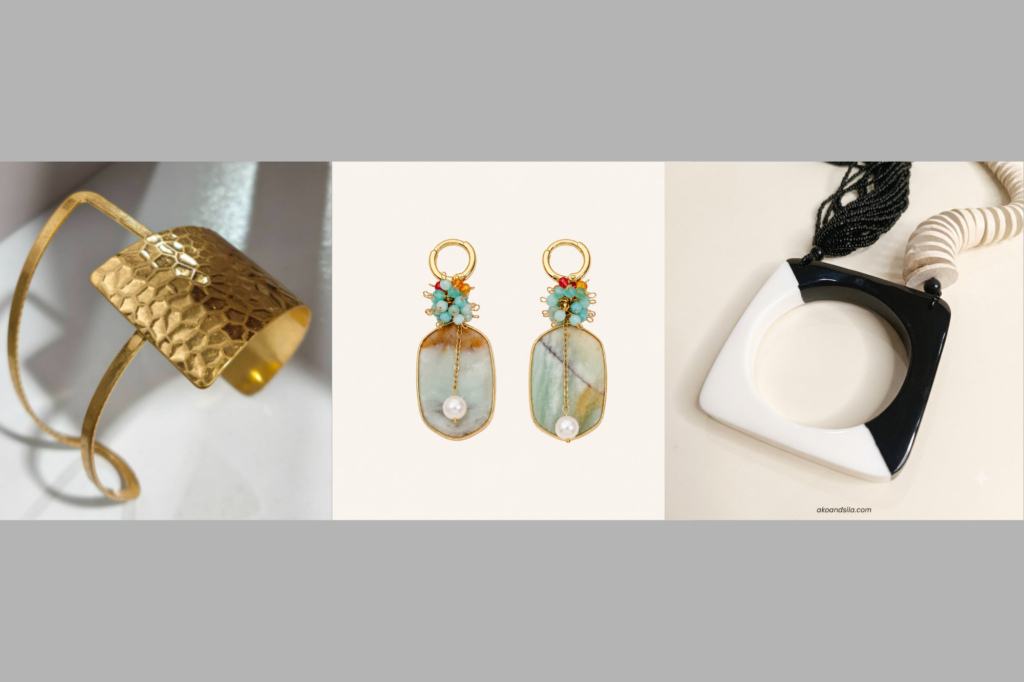
Fashion jewellery is made from a wider range of materials than most people realise, and the choice of material affects not just how a piece looks but how long it lasts, how it feels against skin, and how much maintenance it needs. Wood, brass, and stainless steel are three of the most common materials in the ako & sila range, and they suit quite different people and contexts.
Wood
Wood is the most organic option — warm, lightweight, and variable in a way that no two pieces are identical. It suits relaxed, natural dressing and works particularly well with earthy tones, linen, and casual summer wardrobes. It’s not a material that suits formal contexts easily, but within its register it has a warmth and character that metal doesn’t.
The practical considerations: wood needs to be kept away from prolonged water exposure, which can cause swelling or cracking. It doesn’t tarnish but it can dry out in air-conditioned environments — occasional conditioning with a small amount of natural oil keeps it in good condition. For people who want low-maintenance jewellery they can wear without thinking, wood requires slightly more care than metal.
Wood is a good choice if you lean toward natural, relaxed dressing and want pieces with an organic, handmade quality.
Brass
Brass is the workhorse of fashion jewellery. It’s warm-toned, substantial in weight, takes plating and finishing well, and has a quality in the hand that lighter metals don’t. It’s the base metal for a significant proportion of fashion jewellery globally, often gold-plated or finished to a specific tone.
The practical considerations: brass tarnishes over time as it reacts with air and skin moisture. This is reversible with simple cleaning, and some people come to appreciate the patina. All ako & sila brass pieces use nickel-free finishes, which addresses the most common skin sensitivity concern. Brass is not suitable for prolonged water exposure — take pieces off before swimming or showering.
Brass is a good choice if you want warmth and weight in your jewellery and don’t mind occasional simple maintenance.
Stainless Steel
Stainless steel is the most practical of the three. It doesn’t tarnish, doesn’t corrode, is resistant to water and sweat, and is one of the safest materials for sensitive skin. It has a cool, contemporary finish that works well with modern, minimal dressing. The trade-off is that it has less of the warmth and character of natural materials — it looks and feels more engineered, which suits some aesthetics very well and others less so.
The practical considerations: almost none. Stainless steel is the closest thing to a maintenance-free jewellery material. It scratches less easily than softer metals and holds its finish longer than plated pieces.
Stainless steel is a good choice if you prioritise durability and practicality, have sensitive skin, or lead an active life where jewellery needs to keep up.
The honest summary
Wood: most character, most care required, best for natural and casual dressing. Brass: most versatility, moderate care, best for everyday and occasion wear. Stainless steel: most practical, least maintenance, best for active wear and sensitive skin.
Most people end up with pieces in all three, which is probably the right answer.
If stainless steel sounds like the fit for sensitive skin or an active lifestyle, Stainless Steel Jewellery: The Practical Case for an Underrated Material goes further into why it holds up so well, and our shop has pieces across all three materials to compare in person.