
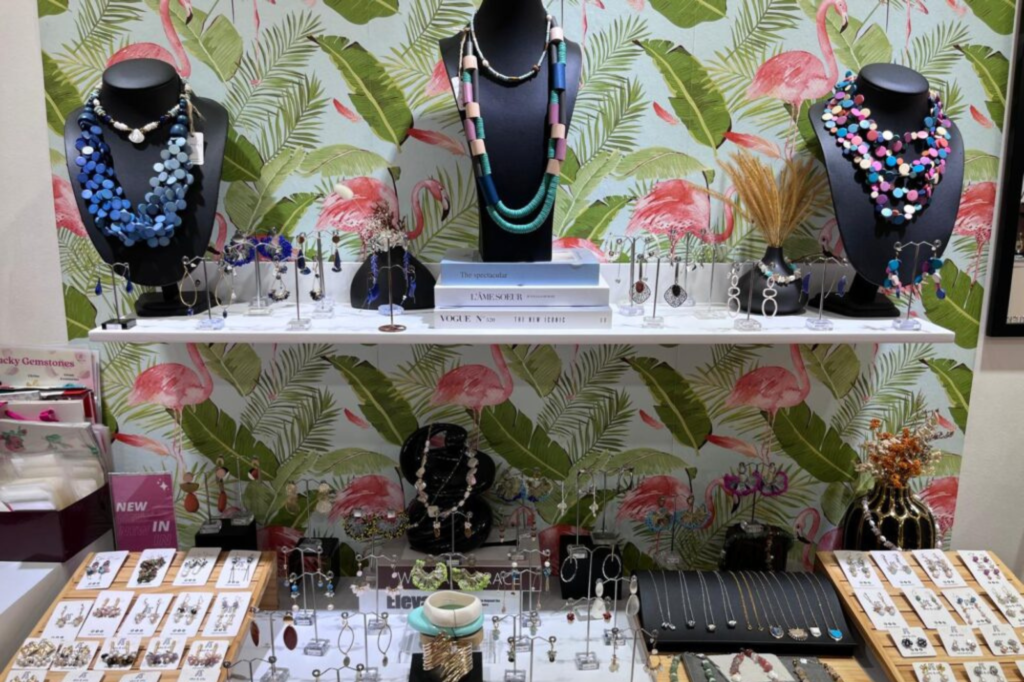
Chatuchak Weekend Market is one of the most competitive retail environments in Southeast Asia. Thousands of vendors, hundreds of jewellery stalls, and customers who can see the next option from where they’re standing. In that context, display isn’t a secondary consideration — it’s the first sales tool you have before anyone picks up a single piece.
These are the display principles we’ve developed and observed across years of trading in Bangkok’s markets.
Vertical space sells more than horizontal space
A table covered in jewellery laid flat looks like a jumble sale from three metres away. Vertical display — pieces hanging, standing, or elevated — is visible from a distance and communicates what you’re selling before a customer has committed to approaching. Earring stands, T-bar necklace holders, small fabric-covered busts, and tiered risers all create vertical presence from limited table space.
At Chatuchak, where stalls are compact and aisles are narrow, customers often make the decision to approach or pass from a metre or two away. If your display isn’t visible at that distance, you’re working with a fraction of the foot traffic passing you.
Group by category, not by price
Customers browsing a market stall scan by type — they’re looking for earrings, or they’re looking for a necklace. Grouping by category makes the scan faster and more satisfying. Grouping by price makes sense in a shop with staff to guide customers; it doesn’t work in a self-directed market environment where the customer is navigating alone.
One focal point, not many
The instinct at a market is to show everything you have. The result is usually a display with no focal point — nowhere for the eye to settle before moving on. A single hero piece or group of pieces given prominent, uncluttered space draws the eye and gives customers something to engage with first. Everything else supports that focal point rather than competing with it.
Your best-selling, most visually striking pieces earn the hero position. The rest of the range sits around it.
Lighting makes an enormous difference
Chatuchak sections that are covered or partially shaded lose natural light, and jewellery without good light disappears. Battery-powered LED strip lights or a small clip light aimed at the display transforms visibility — particularly for metal and stone pieces that reflect light and catch the eye. This is one of the most cost-effective display investments available.
Keep the display restocked and tidy throughout the day
A display that looks picked-over by mid-morning signals low stock and puts customers off. Regular restocking from your reserve, straightening pieces that have been moved, and maintaining the display throughout the day keeps the stall looking full and considered. It also signals that trade is happening, which encourages customers who might otherwise walk past.
The price tag question
At Chatuchak and similar markets, some vendors display prices and some don’t. Displaying prices reduces the friction of the first question and lets customers self-qualify before they engage — which means the conversations you do have are with people who’ve already seen the price and are considering buying, not just checking. For wholesale enquiries, a separate conversation makes more sense than a displayed wholesale price.
Good display is the difference between a stall that browsers notice and one they stop at. In a market the size of Chatuchak, that distinction is the whole business.
If you’re planning a full pop-up range rather than a single display, our pop-up events page covers how we approach it, and How to Build a Jewellery Range for a Pop-Up Market Stall goes deeper into the planning side.