
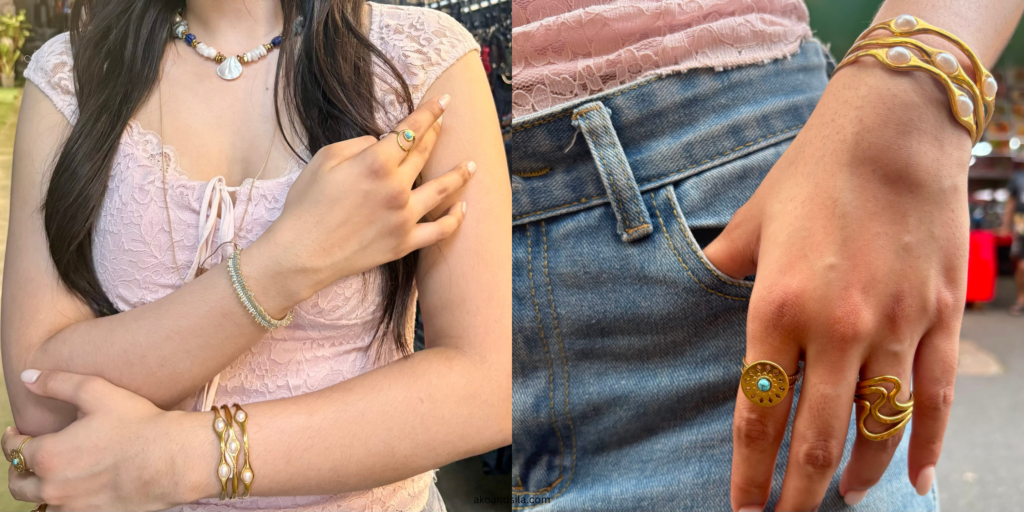
Mixing metals used to be one of those unwritten rules — gold with gold, silver with silver, and never the two together. That rule has quietly collapsed, and what replaced it is something more interesting: the idea that mixed metals, done with intention, look more personal and considered than a perfectly matched set.
The key word is intention. Random mixing reads as disorganised. Deliberate mixing reads as style.
Start with a dominant metal
The simplest way to approach mixed metals is to choose one as the dominant tone and use the others as accents. If most of your pieces are gold-tone, adding one silver or oxidised element creates contrast without chaos. The dominant metal anchors the look; the secondary one adds interest.
Problems tend to arise when two metals are present in equal proportion with no clear hierarchy. The eye doesn’t know where to settle, and the result feels accidental rather than chosen.
Warm and cool tones
Gold, brass, and copper are warm metals. Silver and stainless steel are cool. Rose gold sits between the two. Mixing within the same temperature — warm with warm, cool with cool — is the most forgiving approach and works almost automatically. Mixing across temperatures (gold and silver together, for instance) requires a stronger hand and usually works best when one is clearly dominant.
That said, gold and silver together has become one of the more recognisable contemporary jewellery combinations, and it works well when the pieces are otherwise coherent in scale and weight.
Scale and weight matter more than metal
A fine gold chain and a chunky silver cuff will look mismatched not because of the metals but because of the scale difference. Pieces of similar weight and scale cohere much more easily, even in different metals. Think about what each piece is doing in terms of volume before thinking about colour.
Let the outfit guide it
Neutral outfits — white, black, navy, camel — work with almost any metal combination because there’s no colour competition. Outfits with warm tones (terracotta, olive, rust) tend to flatter warm metals. Cool tones (grey, blue, green) suit silver and cooler finishes. This isn’t a rigid rule, but it’s a useful starting point when you’re uncertain.
The practical approach
If you’re new to mixing metals, start with two rather than three. A gold-tone earring and a silver-tone bracelet is a manageable combination. Add a third element once you’re comfortable reading what works. Most people find their own instinct develops quickly once they stop treating mixed metals as an error to avoid.
The broader point is that jewellery is most interesting when it reflects something about the person wearing it. A perfectly matched set in one metal is coherent. A considered mix of two or three is a statement — quieter, but more yours.
The same instinct applies once you start layering pieces together. How to Layer Jewellery: A Simple Guide to Mixing Pieces takes the logic further across necklaces and bracelets, and our rings edit is a low-stakes place to start mixing metals for the first time.